
Closing the Gap in Cochlear Implant Access
Cochlear implant technology is better than ever, candidacy is expanding, and awareness is growing. So why are so many potential candidates still not reaching a cochlear implant evaluation?
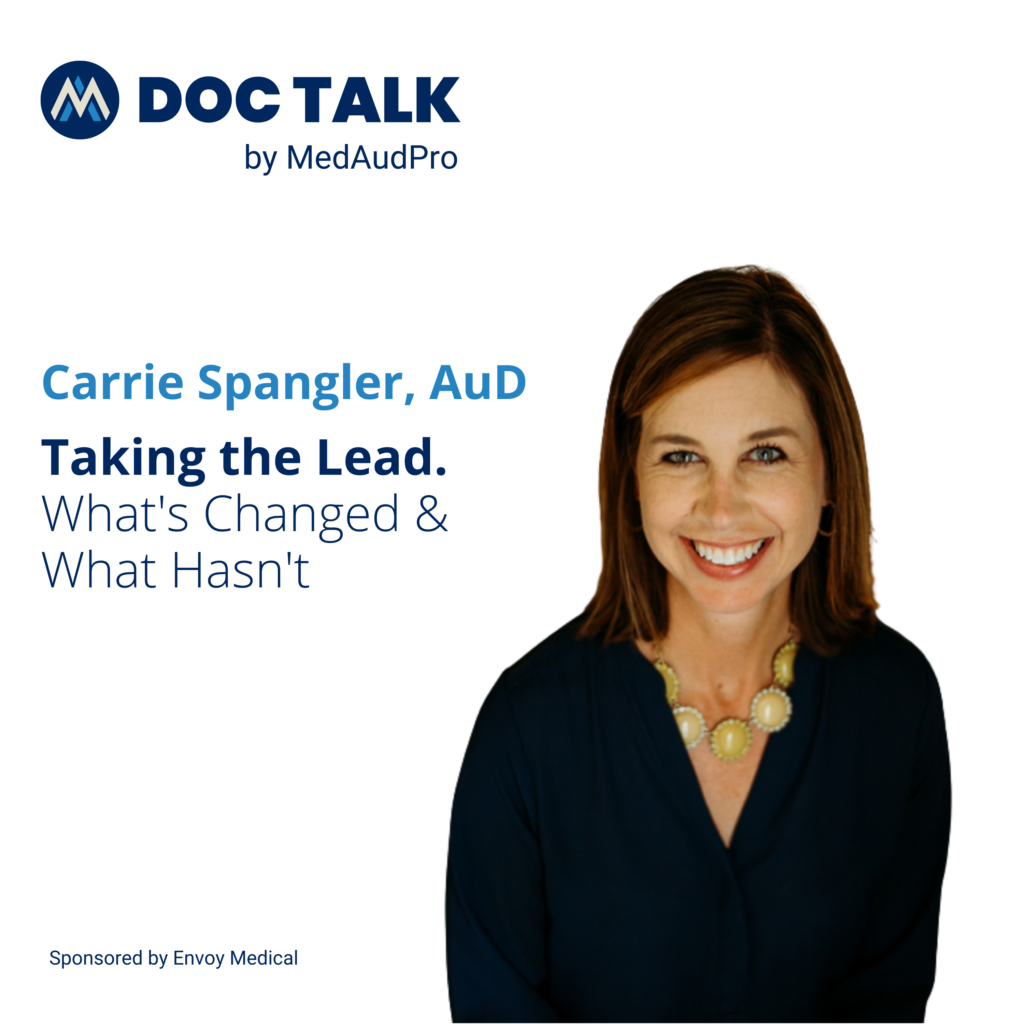
In this episode, we sit down with Carrie Spangler, AuD, Executive Director of the American Cochlear Implant Alliance, to talk about where the field is making progress, where access still breaks down, and what providers can do differently.
Dr. Spangler brings a unique perspective to the role. She spent decades as an educational audiologist, was born with bilateral hearing loss, received her first cochlear implant in 2019, and became a bilateral recipient in 2025. Today, she leads ACI Alliance at a time when referral, reimbursement, awareness, advocacy, and patient expectations are all changing.
What You’ll Hear:
Why Better Technology Isn’t Enough: The biggest opportunity may not be the device itself, but the systems that help patients understand, access, and move through cochlear implant care.
The Awareness Problem: Why many patients still do not understand what a cochlear implant is, who may qualify, or when they should start asking questions.
Making Referral Easier: How tools such as the 60/60 guideline can help community audiologists and hearing healthcare providers recognize when it may be time to refer.
What Policy Has to Do With Patient Care: Why Medicare, Medicaid, insurance coverage, and reimbursement decisions directly affect what happens in the clinic.
New Tools for Providers: A look at ACI Alliance resources, including a Medicaid toolkit designed to help clinicians and families navigate coverage and access.
Building Better Referral Relationships: Why cochlear implant programs may need to reach outward to community audiologists, ENT practices, and other providers instead of simply waiting for patients to arrive.
What Patients Are Really Worried About: Surgery, outcomes, technology, cost, and uncertainty can all influence whether someone moves forward, even when they may be a strong candidate.
A Clinician and a CI Recipient: How Dr. Spangler’s own cochlear implant journey shapes the way she thinks about advocacy, counseling, continuity of care, and the importance of community.
The takeaway is simple: expanding cochlear implant candidacy does not automatically expand cochlear implant access.
Patients still need someone to recognize the possibility, start the conversation, answer enough questions to reduce uncertainty, and help them take the next step.
For providers outside of a cochlear implant center, that may be one of the biggest opportunities to improve care.
Who should listen?
Audiologists, otologists, neurotologists, cochlear implant teams, ENT providers, hearing healthcare professionals, clinic leaders, educators, students, advocates, and anyone interested in improving cochlear implant awareness, referral, and access.
Stay up to date with us on LinkedIn, Facebook, and Instagram @MedAudPro.
Want to learn more about FCOM?
Join the MedAudPro Provider Community: